Breast Implant Illness (BII)Concerns about implants taken seriously – thorough information and individual counselling at Park-Klinik Birkenwerder north of Berlin.
Surgery information
Surgery duration:
about 180 minutes
Price for implant removal:
Implants out:
from 2.900 €
Implants out and BEAULI:
from 6.800 €
Implants out, BEAULI™ and tightening:
from 13.800 €
incl. 19% VAT plus anesthesia
Price for implant removal:
En Bloc:
from 6.400 €
En Bloc + BEAULI:
from 10.300 €
En Bloc + tightening:
from 11.854 €
incl. 19% VAT plus anesthesia
Anesthesia:
Twilight Sleep or General anesthetic
Stay:
1 night outpatient
After treatment:
Plasters remain for about 4 weeks, compression bra should be worn for 4 weeks, re-presentation after 10 days, no stringing needed
Dear Patients, We would like to inform you here on the topic “Breast Implant Illness” (BII). Currently, we receive many inquiries from patients from all over Germany, who are looking for help.
What is BII and who is affected?
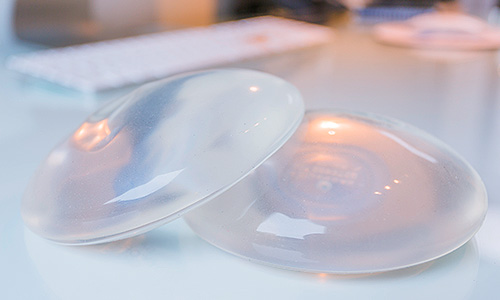
Currently, there is no clear medical evidence for the existence of this disease, as the relationship between the symptoms and the silicone implants could not be finally clarified. Nonetheless, more and more patients are reporting with complaints that have occurred after the implantation of silicone implants.
What symptoms can occur?
Overall, it concerns non-specific complaints such as u.a. Tiredness, headache, rash, nausea and palpitations. These are not reserved for the BII alone, but can have a variety of causes.
What treatment options are there?
In any case, before any surgical treatment is considered, various methods of examination must first be performed, such as blood tests, to clarify other causes that may be responsible for the symptoms. The BII remains an exclusion diagnosis. If these measures have already been taken unsuccessfully, there often remains the great suffering that pushes the patients to surgical therapy.
How is the procedure performed?
If all other disabling options are eliminated, the complete removal of the silicone implants can be done by surgery. Often there is a desire to balance the subsequently missing breast volume. We offer our patients the possibility to transplant autologous fat according to the BEAULI procedure in the same operative session.
What does “en bloc resection” mean?
Concerned that the symptoms may continue to persist, in addition to removing the implants, patients ask for removal of the capsule that has formed around the silicone implant. This concern is often based on the erroneous assumption that the biofilm created after implant placement, which is considered to be co-responsible for the condition, may remain in the capsule. The fact, however, is that biofilms only cover foreign bodies, in this case the silicone implants, not the capsule formed by the body.
In addition, the volume loss due to this more radical procedure is not negligible, so that the breast is smaller than before. In addition, due to the large wound surface, if desired, the rate of healing of the autologous fat is significantly reduced. Therefore, given that the capsule is absorbed by the body after removal of the implants, the en-bloc procedure does not seem necessary. If, on the basis of this knowledge, patients continue to desire this procedure, this procedure can, of course, be carried out.
What is a capsular contracture and what causes the capsular contracture in the body?
Video: Warum kapselt der Körper Implantate ab und was ist ein „Biofilm"?
If it is a BII, the removal of the silicone implants will improve to complete symptom relief. However, as the symptoms are nonspecific and may also occur in patients without silicone implants, it is possible that the symptoms will persist even after the procedure. Currently it is not possible to estimate this already before an operational distance.
Latest study results on the subject of capsules in breast implant illness
ISAPS statement on breast implant removal and capsulectomy ISAPS Statement zu Breast Implantatentfernung und Kapsulektomie
[...] There has been a worldwide increase in the number of patients requesting implant removal for a variety of systemic symptoms that they attribute to their implants. This has been referred to as Silicone Incompatibility Syndrome (SIS), Autoimmune/Inflammatory Syndrome Induced by Adjuvants (ASIA), and Breast Implant Illness (BII).1
In the US, the Food and Drug Administration (FDA) has included systemic symptoms in a box warning that is required for all implants sold in the US which states, “Patients receiving breast implants have reported a variety of systemic symptoms such as joint pain, muscle aches, confusion, chronic fatigue, autoimmune diseases, and others. Individual patient risk for the development of these symptoms has not been well established. Some patients report complete resolution of symptoms when the implants are removed without replacement.”2
Patients with self-described symptoms request removal of the implant and capsule, “en bloc”. Their concern is that toxins from the implant, such as heavy metals, including platinum, silicone, and/or bacteria and fungus, could be in the capsules and failure to remove the capsule would leave toxins behind and could preclude symptom improvement. For that reason, they seek out surgeons who guarantee total en bloc capsulectomy and this is perpetuated on some social media sites as well as by surgeons who promote themselves as “explant experts”.3
You can download the entire ISAPS statement on breast implant removal and capsulectomy under the following link:
Treatment: Breast Implant Illness (BII) Review from Google Maps
Ein hervorragendes OP-Team samt Anästhesisten sowie tollen Krankenschwestern und Pflegern rundeten meinen 2 Tägigen Aufenthalt wegen Implantatwechsel ab.
Auch die Anmeldung muß hierbei lobend erwähnt werden.
Mit dem Ergebnis bin ich mehr als zufrieden und kann die Parkklinik nur wärmstens weiterempfehlen.
★★★★★
September 2021
Treatment: Breast Implant Illness (BII) eKomi archive
Liebes Parkklinik -Team ,
es sind nun 4 Monate seit meiner Op vergangen.
Ich möchte mich noch einmal bei Ihnen allen bedanken.
Besonderer Dank geht an *** .
Danke das er mich von meinen Implantaten befreit hat und mir eine schöne Brust gezaubert hat.
Die eine Seite ist zwar etwas kleiner, aber ich fühle mich trotzdem wohl und wir haben uns gut angefreundet. Vielleicht…Liebes Parkklinik -Team ,
es sind nun 4 Monate seit meiner Op vergangen.
Ich möchte mich noch einmal bei Ihnen allen bedanken.
Besonderer Dank geht an *** .
Danke das er mich von meinen Implantaten befreit hat und mir eine schöne Brust gezaubert hat.
Die eine Seite ist zwar etwas kleiner, aber ich fühle mich trotzdem wohl und wir haben uns gut angefreundet. Vielleicht entscheide ich mich später nochmal für eine 2.Auffüllung.
Mein Wohlbefinden hat sich seitdem enorm gebessert.
Ich wünsche Ihnen allen alles Gute ,bleiben sie gesund und machen sie weiter so.
★★★★★
February 2020
Treatment: Breast Implant Illness (BII)
Ich hatte mir vor ca 9 Jahren meine Brust (Ausgangslage 80B) nach 2 Schwangerschaften mit 290cc Polytech Implantaten (dann 80D) straffen lassen. Nach nur ca 2 Jahren bekam ich schon die ersten Probleme damit, Fremdkörpergefühl, eine spitze Kante schaute raus. Ich bin dann über die Jahre immer wieder zu Chirurgen/Radiologen, um meine Brüste untersuchen zu lassen, alles ohne…Ich hatte mir vor ca 9 Jahren meine Brust (Ausgangslage 80B) nach 2 Schwangerschaften mit 290cc Polytech Implantaten (dann 80D) straffen lassen. Nach nur ca 2 Jahren bekam ich schon die ersten Probleme damit, Fremdkörpergefühl, eine spitze Kante schaute raus. Ich bin dann über die Jahre immer wieder zu Chirurgen/Radiologen, um meine Brüste untersuchen zu lassen, alles ohne bedeutenden Befund, die Spitze sei ein optischer Mangel, Implantat etwas gestaucht an der Stelle. Seit ca 2 Jahren dann immer wiederkehrende Schmerzen in der Brust, mal mehr mal weniger und mittlerweile durch 5kg mehr auf den Rippen schon ein 80E.
Im Oktober diesen Jahres dann solche Schmerzen, dass ich mich mit dem Thema Explantation immer mehr befasste, in eine Gruppe bei FB ging, die über BII (Breast Implantation Illness) Erkrankung informiert und viel über Probleme mit Silikonimplantate lass. Eine gute Bekannte gab mir den Tipp, mal ein Beratungsgespräch bei Dr. Ueberreiter zu vereinbaren. Das tat ich dann auch und entschied mich nach einer ausführlichen und super Beratung (Befund Kapselfibrose) für eine Explantation mit Straffung und Aufbau mit etwas Fett im Dekolletébereich (BEAULI Methode).
Ich wollte meine Brüste wieder natürlich, ohne irgendwelche Schmerzen und Fremdkörpergefühl und außerdem wollte ich sie auch definitiv kleiner haben (kleines 80C). Ich bin nun 11 Tage Post OP und bin so happy, Herr Dr. Ueberreiter hat eine Meisterleistung vollbracht. Meine Brüste sehen schon jetzt wunderschön aus, obwohl ich noch Tapes auf den Narben habe. Die Form ist einfach gigantisch. Meinen Kontrolltermin habe ich nächsten Freitag und dann werde ich sie richtig sehen, also ohne Tapes. Aber man kann jetzt schon erahnen, dass sie Narben sehr fein sein werden.
Ich war 2 Tage in der Park Klinik Birkenwerder und hatte ein Rundumsorglospaket bekommen. Auch mein Anästhesist Dr. Schmuck hat super Arbeit gemacht, keine Probleme während und nach der OP, mir ging es gleich super. Er kam nochmals am OP und nächsten Tag vorbei, um sich nach meinem Befinden zu erkundigen. Auch die Schwestern sind einfach top, habe mich einfach super wohl dort gefühlt.
We use only technically necessary cookies by default. External media (YouTube videos, Google Maps)
and statistics (Google Analytics) are used only with your consent. You can change your
choice at any time via “Cookie settings” in the footer.
Privacy policy